There is No Such Thing as a Complete History
This post was prompted by a brief interaction I saw on Bluesky a while back, where someone proudly shared they were starting an ancient history podcast geared towards sharing their expertise in a more public way. Someone jumped in to bemoan how the title of the podcast and the topics were too traditional. Despite assurances that their understanding of ancient history was broader than that, and that they were mainly operating within their own areas of expertise first before broadening out, the criticism continued. I am not sure why this bothered me so much, perhaps it was cavalierness of demanding someone else spend their (limited) time to cater to whatever you want, but perhaps because I think there is a fundamental dead-end with this type of logic. It is also an endemic feature of internet culture, where people assume that sharing one piece of information represents an entire host of other positions. What you get is tortured explanations, where a person needs to wade through layers of caveats before they reach their point. "Yes, I know about X, Y, Z but I'm not talking about that right now" is a symptom of a corrupted style of discourse that is often superficial.
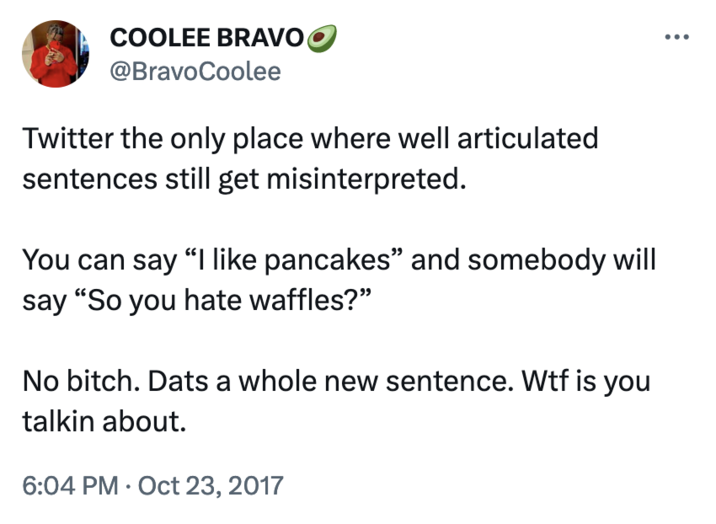
I think this can be traced to an increasingly individualized mode of consumption. Instead of participating in shared discourses around art, or the past, algorithmic modes of recommendation often confine us to the familiar. Short form video and social media, which prioritizes decontextualized hot takes, further emphasizes the circulation and recirculation of "facts." Over time these take on meaning of their own through repetition, leading to ideas simply divorced from reality. Ideas such as "no one teaches Shakespeare" or "ancient history is only about dead men" are not only incorrect, they warp how newcomers see and understand the world.
This follows a point made by Carlee Gomes in an essay from 2023 that discusses anxieties over sex in film as a reflection of the shift in how viewers, here transformed into "consumer-spectators," understand themselves in relation to cultural productions. Gomes points out how the act of consumption takes on a moral imperative, where what we consume "has become the stand-in for our very realities, our very political action as citizens; consuming has become our praxis."[1] Similarly, and expanding the frame a bit to place the viewer as a participant themselves, I am also thinking about Alan Elrod's piece in Liberal Currents about the "parasocial" relations between Americans and their political figures. In this imagining of consumption, political (i.e. public) figures can stand in for the rhetorical and political fashions of the viewer, divorcing them from the realities of their stated positions:
Frequently, the feelings we assign to these individuals are wildly, terrifyingly out of proportion to roles they play either in public life or—more importantly, perhaps—our own personal lives.[2]
In my view, this leads to a style of online interaction that cannot tolerate incompleteness or uncertainty. If what we consume reflects us, then every cultural object must encompass all our priorities. What we see thus becomes simply a mirror for our own interests. This also leads to the absolutely tedious comments you see all over social media that if something isn't happening to that specific person, it isn't true. It is why seemingly simple statements provoke tons of replies critiquing the poster for leaving out some other piece of information. More than that, there is a paradox of social media that proclaims everything while making it structurally impossible. When social media rewards decontextualized "gotchas" it creates incentives to not build on other people, but find the point of attack. The original context is erased and flattened, whatever the original discussion was, now slain at the altar of the Discourse du jour. These types of critiques serve to recenter the original poster's intentions and ideas onto whatever the viewer actually believes. It bridges the chasm between two human beings by erasing one of them and creating a fiction. In an age of algorithmic slopification, retaining distinctness among topics is vitally important.
There is a danger in letting this inability to handle complexity shape how we perceive the work of historians. Algorithms want to homogenize online experiences, but people and events themselves resist homogenization. Historians are known for constantly admonishing people that things are "complicated" and there is a good reason for that! Rarely do events have one single explanation. Academics do not work at the speed of a social media post, but you do see numerous complaints that a certain type of history dominates, or that other types are "outdated." There is so much work published, unless they themselves are an academic operating in good faith, they probably are only seeing the tip of the iceberg. What gets clicks on social media often doesn't correspond to reality, or actively ignores what exists to claim something is unique. Before anyone comes for this opinion, and here I am doing the exact caveating I'm protesting as a bad thing, this is something that happens on all sides of the political spectrum (even if I think the right-wing stuff is backed by more bad-faith and state power).
If you are enjoying this piece please consider subscribing as either a free or paid member and sharing on social media. Researching and writing these pieces takes time, subscribing lets me grow my audience and move towards making it sustainable long term. You can also donate or upgrade too.
We don't need to give in to this tendency, however. Because a work doesn't focus on, say, kings, doesn't mean it is ignoring it. A good principle is to engage with what was actually written, not what it hypothetically represents in a fictional universe. A lot of this criticism boils down to "this isn't the piece I'd have written." But that is the rub with actually interacting with other people, they don't do exactly what you want! I would suggest this is preferable to a perfectly curated garden that is sterilized by caveats and disclaimers. It is no gotcha that a book only handles religion in a certain area of the world or at a certain time. You can make fair critiques that someone is missing important context, but we need to actually deal with the stated goals of the author. If they say they are planning to talk about monasticism in the eighth century in England, you can maybe ask how it fits into continental practice. But realistically the answer will probably be "I didn't have time or space to go fully into that." What doesn't really make sense is to ask why said book doesn't talk about kingship extensively. Why would it?
Fundamentally, the error is that no article, book, podcast, etc. can do everything at once. Scholars dedicate themselves to specific areas not because they think everything else is pointless (ok, well hopefully not), but because there is too much for one person to know. Good scholars try to keep abreast of other areas and approaches but it is no small feat. This does not get around the simple fact that one historian cannot handle every facet of the human experience in their book, let alone in their research. A scholar choosing to be interested in a specific topic is not an invitation to ask why they don't focus on something else. We don't get to demand other people accommodate all our whims, that would be a grim world indeed. So next time you see someone being a tedious reply-guy online, don't give in to the urge to reward it with more retweets.
Instead realize that not everything needs to be about everything else. When I see a book about thirteenth century canon law, I don't comment saying "that isn't what I want" because I'm not the target audience. Likewise with movies, art, etc. I can certainly have opinions on those things, but they are also not for me necessarily. I don't expect them to be either, and that is the real takeaway here. It is good for things to exist that are outside our comfort zones, because you never know when you may need them. When I wrote my dissertation I didn't care about early medieval baptism, but in the process of writing it became essential to one specific argument I was making in a few paragraphs. I'm certainly glad someone had taken the time to do that work! Yet my dissertation could not exist if history was "solved." Creating history is a balancing act between taking onboard what already exists, finding what doesn't, and disagreeing with previous scholars (at times). That is to say, it requires understanding that "completeness" for any given topic is probably an illusion. The drive for completeness comes from the point of view that the True Past is out there waiting to be uncovered, and once it is then no further work is required. That eventually we can reach a state of perfect history, where every issue and event has been properly explained and cataloged. History, however, does not work that way. History is inevitably entwined with the historian, and the reader. What we bring to the past shapes what we ask of it, so there can be no final complete history. Learning to sit with the incompleteness is OK, or at least should prompt you to pick up a text and get working.
Thanks for reading Among the Ruins! If you haven’t subscribed, please do so below and you can have these posts delivered right to your inbox!