Why You Should Read Academic Books (Even If You Aren't An Academic)
History publishing operates along largely two tracks: the first is the more traditional scholarly monograph published through an academic press (Cambridge, Oxford, Brill, etc.). The second is what is often called "popular history" and is published through a trade publisher (Random House, etc.). People can be real snooty about this sort of thing, casting all pop history as bad by default. That isn't my goal here but to explain why even if you aren't an expert there is good reason to occasionally dip your toes into the academic waters. I want to walk through some common criticisms and misconceptions about academic writing.
I am sure some out there would cast academic history negatively by saying something like: "academic history is stale, boring, eurocentric, etc." and that we don't actually need it anymore. Anti-intellectual critics may charge that it is nothing more than revisionism, replacing good history with bad to fit a present agenda. But the question of revisionism is for another day. Put simply, the answer is that academic work often serves a very different role to popular history and it is critical to understand this to grasp its value. What appears boring to one is often vitally important to someone else.
Now, this isn't to say that academic works are meant to be unreadable or jargon heavy. They can be those things, but so can any type of book. That is, it is more a question of style than rigor. Popular history is often held up as a sort of antidote to the stuffiness of academic prose. This is a dichotomy that I think doesn't really hold up to scrutiny, and the trend in academic publishing itself is towards shorter, more accessible volumes anyways.
It is easy to find studies to ridicule if you aren't embedded in the field's debates. (On an academic field, can I interest you in my recent post about it?) Academic studies, in essence, are going to lay out the evidence and subject it to extensive critique and analysis. Without these works, it would be like starting from scratch every time.
 Jon Dell Isola
Most of the time, I need to draw on these works to contextualize the arguments I am interested in making. When I encounter reference to plants in a ninth century source, I don't need to come up with my own theory about them when I can go refer to Paolo Squatriti's Weeds and the Carolingians. Sometimes these studies can open up new questions, such as a book I read during my Cambridge year titled The Social Logic of Space. Before I needed to read any of these studies, it would have been easy to cast them as frivolous. Likewise during my dissertation when I needed to read several articles on early medieval baptism, I didn't know what would be useful ahead of time and, I'm willing to guess, neither does anyone. If historians didn't refer to specialized studies, they would spend a whole lot of time redoing work.
I also think the audience is broader than it appears, because cost is often an issue. It is generally much easier and cheaper to get a hold of a pop history than an academic one. This is partially a function of the academic publishing model, which especially in terms of articles is consolidated behind massive publishing companies. While they make money hand over fist, the academics writing articles and books do not. I make no money from writing an academic article, nor for reviewing one! The increasing number of works available open access has led to many more people reading otherwise inaccessible academic works.
On that topic, can I take a brief moment to ask you to subscribe either as a free or paid member? Every subscription helps, and if you like my writing please share it widely!
One of the criticisms lobbed at academics is that they only write "for five other people" but I would venture a guess that the audience would be significantly larger if it was more accessible. Yet at the same time this hyperspecialization can lead to studies that are essentially too arcane to be useful. A lot of this criticism, however, falls into the "everything should be for be everyone" mindset that is rampant across the internet. Simply put, it is not a problem if a piece of writing, or art, or a movie, doesn't appeal to you. An article written for a small subset of advanced scholars doesn't need to be this super captivating piece of narrative history because it isn't trying to be one.
This is a criticism that I think stems from assumptions that the humanities are not necessarily as difficult or technical a discipline as hard sciences. Most would not levy the same challenge to a paper on quantum mechanics! A small audience for specialized scholarship can have real-world implications that extend far beyond the walls of the discipline. Just look at the birthright citizenship case which depends on specialized legal scholarship (mostly invented to destabilize the existing consensus, but I'm not a legal expert so won't go into it).
Finally, if we think of popular histories as syntheses, that can be very useful, but you can't have that without something to synthesize! In less glib terms, popular histories almost by definition must depend on specialized scholarship. At least good popular histories are informed by numerous specialized studies that are the building blocks for our understanding of the past. Without the academic background to sustain it, popular histories will remain locked into relying on outdated and bad scholarship, if they have anything to access at all. In fact, all scholarship is essentially an act of synthesis, academic or not.
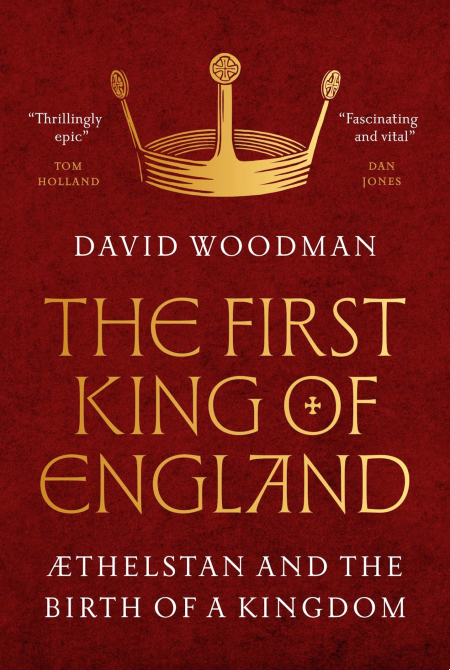
Many books increasingly straddle the line between popular and academic. They are deeply researched and engaged with scholarly debates, but maybe written in a more accessible style or with more overviews for nonexperts. Recently I finished David Woodman's new book The First King of England which is clearly designed for an academic audience (it goes into the sources, has digressions about people, language, etc.) but is written in a more accessible style and attention is paid to orienting non-expert readers. Indeed, I've even seen this in my local bookstore on the shelf, so it isn't a dusty tome only for library shelves!
There is something important about work that engages deeply with a specific topic and set of evidence. If you have more than a passing interest in a given subject, you will be well served seeing the sources, arguments, and theories that professionals are responding to. A popular book might give you an overview to a subject, or a particularly entertaining series of anecdotes, but it is rare indeed to find one that also goes deep into a specific subject. As such popular histories are most useful, I think, for helping to orient you in a new period. If you want to go deeper, I'd recommend moving onto more academic works. Also, some popular books just have so much fluff in them. Much like having to wade through the life story before a recipe, sometimes I just want the argument and sources.
I think it is worth pushing yourself out of your comfort zone into a slightly more challenging book because it will open a whole new genre of things to read. Once you can read an academic work you can read widely and deeply, assuming you can access the books. In closing, my plea is not to stop reading popular history, but to (hopefully) shed the fear of academic work and pick one up. You might be surprised at what you learn.
Thanks for reading Among the Ruins! If you haven’t subscribed, please do so below and you can have these posts delivered right to your inbox!